
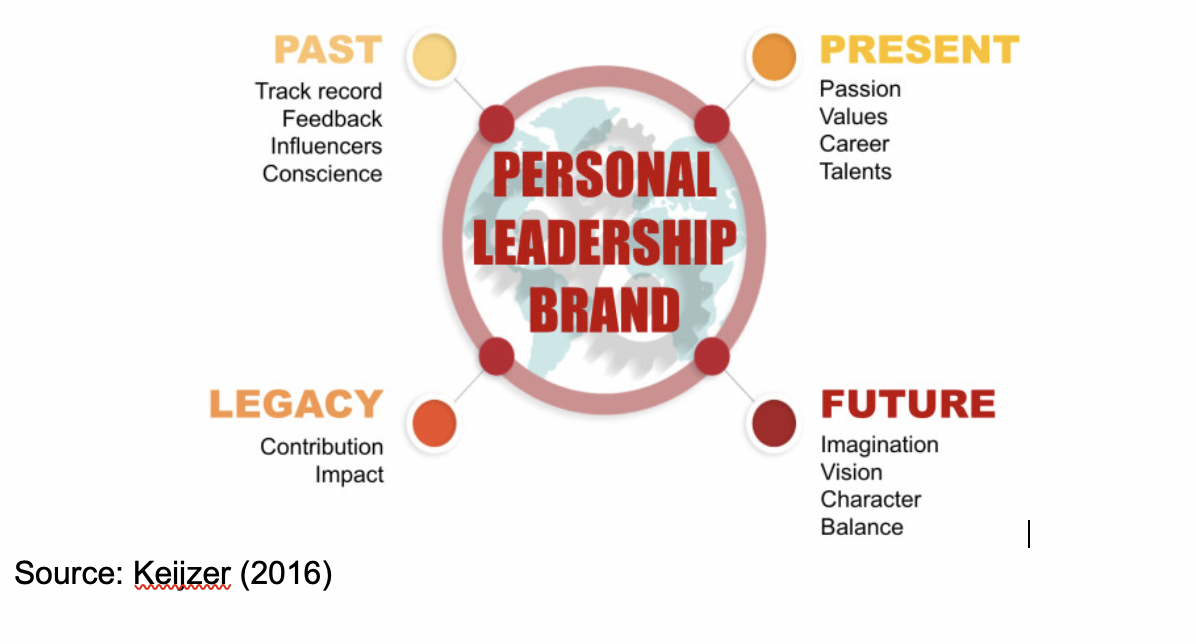
Figure 1: How to Create a Leadership Brand Based on Your Legacy
1. Background
By integrating brand concept and applying it to leadership, this creates the leadership brand by the way an effective leader would behave, react, and interact (Aaker & Joachimsthaler, 2012). In this way, the leadership brand would be rooted in the past which is based on what drive the leader today, aiming at the contribution the leader would like to make and leaving behind the great legacy (Keijzer, 2016).
2. Appraise the leadership brand
Academically, leadership brand is all about the leadership capability within the organisation in converting external customer and investor expectations into employee abilities and organisation capabilities (Ulrich & Smallwood, 2007; Ulrich & Dulebohn, 2015; Leskiw & Singh, 2007; Aaker & Joachimsthaler, 2012). This is in contrast with the conventional leadership style which is about the individual leader affecting on what happens inside an organisation (Goleman, 2003). Hence, leadership brand can effectively guarantee that all business activities within an organisation as well as support the corporate brand, and in turn assist the leaders to develop leadership visions, missions, value, and personal intention and develop their own leadership brand (Aaker & Joachimsthaler, 2012; Ulrich & Smallwood, 2007).
In my situation, I have chosen to explore the situational leadership theory proposed by Hersey & Blanchard (1997) explaining that the effectiveness of leadership would depend on how the followers would accept the leader. Leadership situation changes with the followers’ ability and willingness to work(Grover & Walker, 2003). According to Bjugstad et al., (2006), it is critical that effective leadership should focus on the followers and use the appropriate leadership style based on the followers’ characteristics. Hersey & Blanchard (1997) categorised leadership style based on task and relationship behaviours into 4 distinct types namely, selling, participating, delegating, and telling leadership style (see Figure 2).
Figure 2: Situational Leadership Style and its categorization (Hersey & Blanchard, 1997)
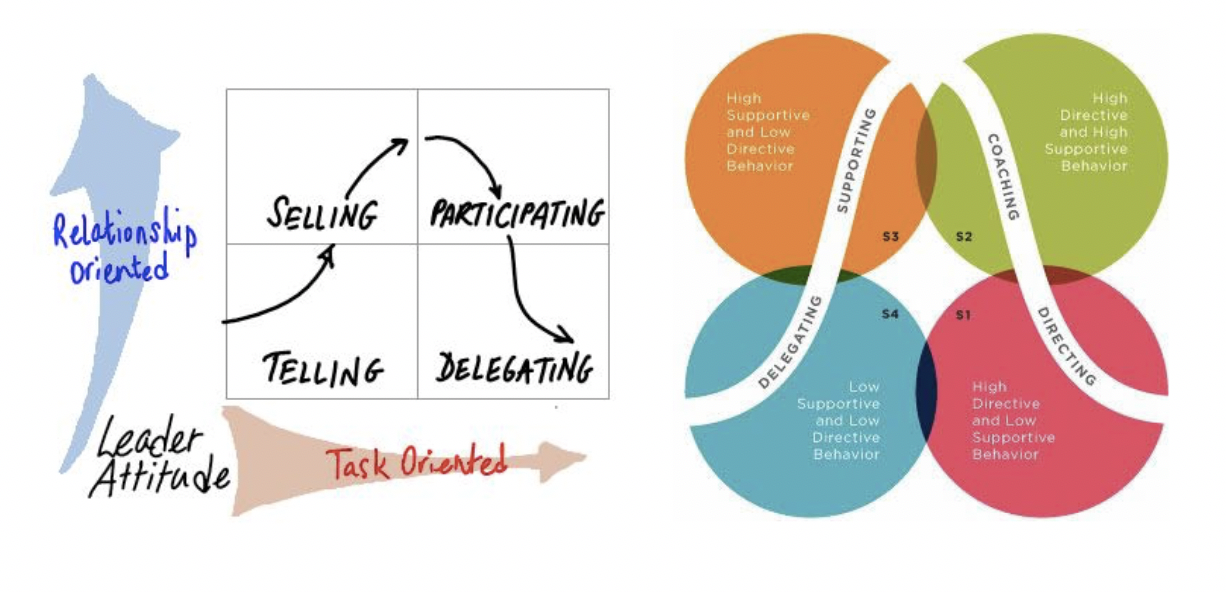
Based on Hersey & Blanchard (1997) situational leadership style shown in Figure 2, I recognise that my leadership ability is not apparent nor effective to my team members due to my lack of experience. Moreover, the difference in background, cultural norms, and characteristics of individual members have made it every more difficult to be accepted. Hence, I have adopted the participating style in order to complete the assigned tasks when working in a team. In other word, my leadership brand is still very weak and needed to be developed towards maturity before finding the appropriate leadership style to suit my personality.
3. Assess the relevance of my leadership brand to chosen career
I have decided to further my study straight after completing my first degree in Entrepreneur Economics, so it is very difficult to justify my leadership brand. However, I have been working in several teams during my final year of study, and I have always been willing to accept the given tasks and manage to complete on time. Given that all my fellow students came from the similar background and cultural norms, so every team member is happy to work in harmony with minimum disagreement leading to conflict (Forsyth, 2018). Furthermore, we were communicating in the same language so this does not become a barrier of restriction in hindering the task (Forsyth, 2018). Therefore, it is right to say that my leadership brand will be towards participating style until I can acquire more experience.
4. Evaluate my current strengths and development needs
Based on my personal evaluation since joining Coventry, I have improved my communication skills especially English skill which helps me to establish a good relationship with other team members. Moreover, I can complete the assigned task on time. As my English skill improved, I become more confidence and willing to express my opinion and contribution to the team. Hopefully, my personal leadership brand will develop towards the right career path.
5. Create a development plan
My future development plan is to improve my communication and English skills so that I am able to exchange ideas, voice my opinion, and establish good relationships with my team members. With confidence gained, I will be able to develop execution skills, social skills with high emotional intelligence and others. As a consequent, I will develop my personal leadership brand that can best suit my personality and beneficial for my future career path.
References:
Aaker, D. A., & Joachimsthaler, E. (2012). Brand leadership. Simon and Schuster.
Bjugstad, K., Thach, E. C., Thompson, K. J., & Morris, A. (2006). A fresh look at followership: A model for matching followership and leadership styles. Journal of Behavioural and Applied Management, 7(3), 304.
Forsyth, D. R. (2018). Group dynamics. Cengage Learning.
Goleman, D. (2003). What makes a leader. Organizational influence processes, 82, 229-241.
Grover, R. A., & Walker, H. F. (2003). Changing from production to quality: Application of the situational leadership trans theoretical change models. Quality management journal, 10(3), 8-24.
Hersey, P., & Blanchard, K. H. (1997). Situational leadership. In DEAN’S FORUM (Vol. 12, No. 2, p. 5).
Keijzer, P. (2016). “How to Create a Leadership Brand Based on Your Legacy” [online] Available at: https://www.business2community.com/leadership/create-leadership-brand-based-legacy-01459400 [Accessed 25 Jun. 2019].
Leskiw, S. L., & Singh, P. (2007). Leadership development: learning from best practices. Leadership & Organization Development Journal, 28(5), 444-464.
Ulrich, D., & Dulebohn, J. H. (2015). Are we there yet? What’s next for HR? Human Resource Management Review, 25(2), 188-204.
Ulrich, D., & Smallwood, N. (2007). Building a leadership brand. Harvard Business Review, 85(7/8), 92.
 knowladge
I agree that leadership situation changes with the followers’ ability and willingness to work. Also, as I have been following your blog for a while, I am sure that you can create a development plan that suits and benefits your future career path.
ถูกใจชื่นชอบโดย 1 คน
Totally agree with the writer about leadership tends to change according to follower. Thank you for writing all of these blogs I enjoy reading them a lot.
ถูกใจถูกใจ
I’m very grateful for your followed my blog, and thank you for your comment as well. I will improve my-self to be a good leader which is suitable with my business.
ถูกใจถูกใจ
I think the owner blog has a good plan, Leadership is not to stand alone. They should have basic of knowledge that will lead others.
ถูกใจถูกใจ
Thank you for your comment.
ถูกใจถูกใจ
The situational leadership theory is really useful because it is the basic to develop personal skills.
ถูกใจถูกใจ
Thank you for your comment.
ถูกใจถูกใจ
It is a good article and very useful In order to adjust yourself better.
ถูกใจชื่นชอบโดย 1 คน
Thank you for your comment.
ถูกใจถูกใจ
A bit unclear about your future path and it’d be better if you provide your long-term goal in this article.
Anyway, i’m pretty sure that you will create your suitable plan soon.
ถูกใจถูกใจ
Thank you for your comment. I will improve my next blog
ถูกใจถูกใจ
I totally agreed with you on how you evaluate current strengths and development needs in part4. Nowadays English has become very important. Many leaders demand it to achieve their goals. Also, i think leadership brand is required manager who can understand english very well.
ถูกใจถูกใจ
Thank you for your comment. I’m very grateful with your feedback
ถูกใจถูกใจ
Following your blog let me think about Self development more, as you mentioned about self improvement reminds me of my goals in every year. I think it would be better if you set your goal more subjective.
ถูกใจถูกใจ
Thank you for your comment.
ถูกใจถูกใจ
Excellent in future development plan
ถูกใจถูกใจ
Thank you for your comment.
ถูกใจถูกใจ
Interesting blog
How could one choose the best leadership style that suits themselves and his/her company? Thanks~
ถูกใจถูกใจ
Thank you for your comment.
ถูกใจถูกใจ
I hope that you could improve your development plan. What will you do to improve your plan?
ถูกใจถูกใจ
Thank you for your comment.
ถูกใจถูกใจ